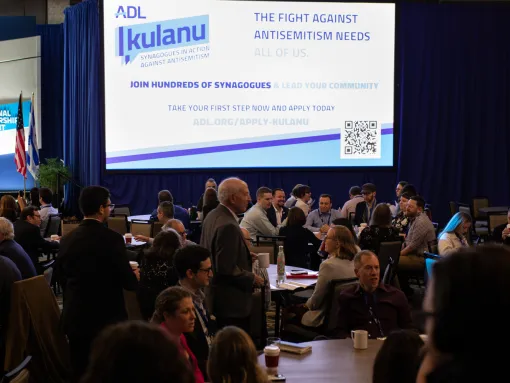
The links on this page will take you to helpful ADL resources to support you as you learn and take action against antisemitism, anti-Zionism and extremism as a Kulanu network member. These resources are not exhaustive. We encourage you to reach out to [email protected] if you cannot find what you are looking for here. ProtectEvery community and individual experiencing antisemitism can turn to ADL for help. By reporting antisemitic incidents and working to detect and disrupt threats, we weaken the…
Preventing Discrimination in Campus Tenure and Promotion Selection Processes
Tools and Strategies
Disclaimer: This resource is not intended to provide and should not be construed as legal advice. Title VII and Legal Obligations for University DecisionsTenure and promotion decisions are employment actions subject to federal and state anti-discrimination laws. Universities must ensure that faculty evaluation, tenure, reappointment and promotion processes are fair, consistent and free from discrimination based on protected characteristics. Under Title VII of the Civil Rights Act of 1964,…
If you encounter antisemitism or biased content in your college or university classroom experiences, ADL is here to help. Campus Classroom Reporting is designed to help students and other members of campus communities identify and confidentially report concerns about antisemitism or biased content related to Jews and Israel in classroom settings, course materials, assignments, discussions, or faculty conduct. This resource provides guidance on what types of incidents should be reported, why…
Addressing Antisemitism and the Limits of Academic Freedom
Tools and Strategies
Disclaimer: This resource is not intended to and should not be interpreted as providing legal advice. Why Academic Freedom and Antisemitism Matter in Higher EducationUniversities are designed to be spaces for open inquiry, debate, and intellectual challenge. Academic freedom protects the rights of faculty, staff and students to explore controversial ideas without fear of censorship or institutional punishment. At the same time, universities have a responsibility to ensure that members of the…
Guide to Reporting Antisemitism for College Students, Staff and Faculty
Tools and Strategies
College and University (Ages 18+)
PurposeThis guide helps you prepare and submit a clear report of antisemitism to your university. You do not need all details to report - share what you know now and add more later. Reminder: You do not need to determine whether an incident was antisemitic or otherwise discriminatory in order to report it. If something felt harmful, targeted, or affected your ability to learn, work, or participate in university life, you can and should report it. The university is responsible for assessing the…
What to Look for in College Syllabi: Evaluating Israel & Jewish Topics
Tools and Strategies
College and University (Ages 18+)
A syllabus shapes how a course frames knowledge, discussion, and acceptable viewpoints. Reviewing it carefully can help identify whether a class supports open inquiry - or risks promoting bias, including antisemitism. Balance of Assigned ReadingsExamine the diversity of sources and viewpoints. Watch for: Readings that overwhelmingly present one political perspective Absence of Israeli, Jewish, or pluralistic scholarly voices in relevant syllabiUse of activist materials presented as…
When Hate Goes Viral: Bias and Antisemitism on Social Media
Tools and Strategies
It’s critical that parents, caregivers and educators learn more about social media and how to support young people in their understanding of its power and limitations.
Questions Universities Should Ask When Vetting Campus Antisemitism Trainings
Tools and Strategies
ProgramsUniversities increasingly rely on trainings for students, staff, faculty and administrators to address antisemitism and related forms of bias on campus. Whether a program is developed internally or delivered by an external provider, institutions benefit from taking a thoughtful, structured approach to reviewing content, pedagogy, and alignment with institutional values. The questions below are designed to support universities in evaluating whether a training is factually accurate,…
Challenging the Anti-Israel “Scholasticide” Accusation
Tools and Strategies
This ADL/AEN resource provides background information regarding the “scholasticide” charge against Israel, including its origins and recent efforts to promote it.
A deep dive into the TCC, the online subculture built around the glorification of mass killers, and its connections to a growing number of attacks worldwide.
Artificial Intelligence: What do Parents, Caregivers and Educators Need to Know?
Tools and Strategies
Related ContentBackground Young people are using AI (artificial intelligence) tools every day for homework, curiosity, creativity, and social interaction. While we don’t have exact statistics on daily AI usage yet, recent Pew Research Center findings suggest that AI use begins to rise sharply by early adolescence, with widespread use among teens ages 13–17. While many see AI as a useful and credible source of information, it needs to be utilized critically and thoughtfully,…
Educators should select narratives for their classroom with thought and care—ensuring that history and fact are presented accurately and with as much balance as possible.
Publicly available maps can be inaccurate or misleading; when used as teaching aids, such biased maps can create a distorted sense of events. For this reason, educators should take care when choosing whether and how to use publicly available maps for instructional purposes, especially when covering complex and ongoing topics.
Resources to facilitate thoughtful conversations with your students about antisemitism, current events and violence, and how we build more communities that stand up to hate.
In a world that is increasingly connected through social media, educators often incorporate current events into instruction. While this is an important tool for educators to make learning feel relevant and current for students, it also must be done with thought and care. Many curriculum offerings claim to offer educators resources and guidance on integrating complex current events into their classrooms, like the Israeli-Palestinian conflict. Sometimes these offerings, while claiming to provide…
Teach for Liberation: Ida in the Middle UnitThrough books, educators are able to support students’ exploration of different points of view, experiences, places, time periods, etc. These are vital offerings in classroom instruction. Sometimes, however, unit plans that purport to offer educators guidance and nuance in presenting materials in their classrooms instead have inaccuracies, bias and misinformation. The guidance below demonstrates how unbalanced unit guides can be problematic…
Vox YouTube Video: “The Israel-Palestine Conflict: A Brief, Simple History”
Tools and Strategies
Educators surveyed in a 2025 RAND study said that after school curricula and U.S. Holocaust Memorial Museum materials, YouTube is their most-used supplement for teaching the Holocaust and related Jewish topics. Although its videos are free and visually engaging, their quality varies; for example, Vox’s “The Israel-Palestine Conflict: A Brief, Simple History” can appear more reliable than it is. Vox itself is an American news and opinion website that leans towards the…
Decode & Disrupt: A Toolkit to Recognizing and Combating Problematic Messages
Tools and Strategies
In recent years, the education landscape has changed dramatically. With the rise of AI platforms like ChatGPT and resource sharing hubs like Teachers Pay Teachers, there are many organizations and resources that claim to offer quality material—often at no cost. The rise of these platforms coincides with a change in trends for educators. According to a report from Education Week, the average teacher uses five supplemental resources and two core curricula sources. While the intention…