









People playing online competitive multiplayer experiences (online games) experience more hate and harassment when playing with a jewish username, shows a study for ADL
216 Results
Back
New research shows the Gringlas Unit effectively teaches students to recognize antisemitism as a recurring conspiracy theory, reducing belief in antisemitic tropes after just one lesson.
ADL Center for Tech and Society's 2023 Online Games Survey shows millions of gamers continue to experience harassment and hate while they play.

Hate parties occur when links shared to fringe platforms lead users to YouTube comment sections to revel in hate, challenging content moderation strategies.

ADL’s research with the Tech Transparency Project shows that major social media platforms continue to algorithmically amplify and auto-generate hateful content.

To evaluate how people are protected from online, ADL reviewed how 9 tech companies support targets of hate and harassment on their platforms.

ADL's 2023 survey shows online hate and harassment rose for adults and teens, with data, analysis, and policy recommendations for tech companies and government.

Scorecard evaluating online social media and gaming platforms' policies and enforcement of removing holocaust denial content

The ADL Center for Technology and Society interviewed leading trust and safety practitioners in the games industry to understand efforts to address hate and harassment in the game industry.

This report analyzes whether deplatforming websites—removing infrastructure services they need to operate, such as payment processing—can reduce the spread and reach of extremism and hate online.

ADL’s fourth annual survey on hate and harassment in online games, including data on the experience of adults, teens, and preteens.

The first analysis of hate and harassment on Minecraft server data.
Join the ADL Innovation Lab and partner with ADL to equip students with digital literacy skills to combat online mis- and disinformation that lead to hate.

ADDITIONAL TERMS FOR EDUCATORS: Generative Artificial Intelligence (GAI): Unlike more traditional AI systems, which are typically designed to recognize patterns in existing data and make predictions based on those patterns, generative artificial intelligence (GAI) systems are designed to produce new content in response to user prompts. These outputs can include text, images, audio or video content. Examples of popular GAI chatbots include Open AI’s ChatGPT and…

When an AI chatbot is asked in English whether recent U.S. behavior toward Iran has been "Jewlike," it recognizes the term as an antisemitic slur and says so plainly. Ask the same question in Persian and the same chatbot answers like a political science professor, analyzing "geopolitical strategies and national interests," rarely mentioning antisemitism at all. When the ADL Center for Technology and Society (CTS) recently tested four of the world's most popular AI platforms, a clear and…

It’s critical that parents, caregivers and educators learn more about social media and how to support young people in their understanding of its power and limitations.
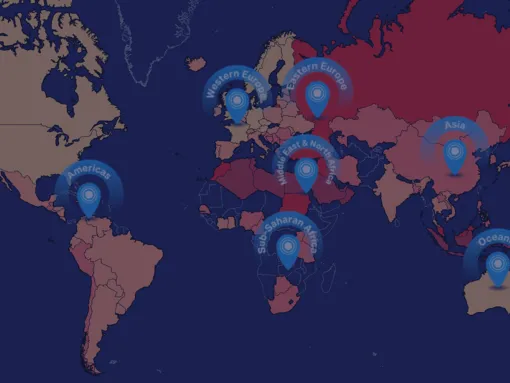
ADL's research and data on antisemitism provides a bridge between history, current events, and students' lived experiences. Explore the Global 100.

Don’t Feed the Lion: IntroductionDon’t Feed the Lion by Bianna Golodryga and Yonit Levi explores the story of antisemitism growing at Oakdale Middle School. The story begins with Theo Kaplan, a 13-year-old Chicago middle schooler and soccer captain. Theo’s world is turned upside down when his professional soccer idol, Wes Mitchell, makes an antisemitic comment that goes viral. The situation escalates when Theo discovers a swastika…

Every two years, we watch athletes compete on the world stage—and what captivates us isn't just the competition. It's the stories: the struggles, the triumphs, the personal journeys that help us see ourselves and others more clearly. The Olympics offer us a unique opportunity to explore something deeper: the complexities of identity—individual and national. When we bring these conversations into our classrooms, we're teaching students to see the human stories behind the…

Related ContentBackground Young people are using AI (artificial intelligence) tools every day for homework, curiosity, creativity, and social interaction. While we don’t have exact statistics on daily AI usage yet, recent Pew Research Center findings suggest that AI use begins to rise sharply by early adolescence, with widespread use among teens ages 13–17. While many see AI as a useful and credible source of information, it needs to be utilized critically and thoughtfully,…