




January
Argentina
A Jewish family was physically and verbally assaulted
Canada
Swastikas were spray painted on a synagogue
Greece
A monument to the Holocaust was defaced
Iraq
Antisemitic comments were made by the country's former Prime Minister
Poland
Nazi symbols were spray painted on the wall of a Jewish cemetery
Turkey
Classic antisemitic tropes appeared in a pro-government…
172 Results
Back
Is your school experiencing a bias or hate incident?Whether it be a racist “joke,” slur, stereotype or some other form of implicit or explicit bias, school community members must be committed to addressing bias-related incidents in schools. Educators and school administrators play vital roles in creating an environment where all students can learn and thrive. Cultivating an equitable and inclusive school community requires ensuring that historically marginalized students are…

Table Talk: Family Conversations about Current EventsAs people increasingly turn to online sources, such as social media and AI, for news and information, a legitimate question arises: "How do I know this information is accurate?" This concern is well founded. Studies, including one published by Yale Insights, have found that social media algorithms and platforms "inadvertently encourag[e] users to spread misinformation." Given these risks, it's perhaps unsurprising that a 2023 Pew study found…
What Educators and Family Members Can DoToday, local, national or international tragedies happen so frequently that they can feel almost commonplace. When a hate crime, mass shooting, act of terrorism or other terrible and hate-inspired event occurs, one of the first questions many people ask is, what should we tell the children? How can we explain to them what has happened? Despite our best efforts to protect youth from the details of hate-motivated events, we can never assume that they are…
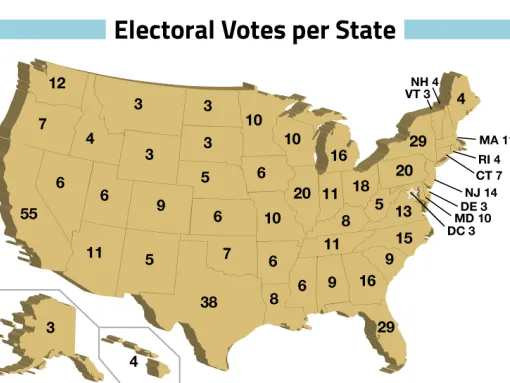
Table Talk: Family Conversations about Current EventsThe Electoral College is an election topic that inspires confusion, controversy and conflict. Many people know that the Electoral College is part of the Presidential election process but may be unsure about its importance and how it works. In the early days of our country’s formation, deciding on the process for electing a U.S. President was a controversial topic. Some suggested that Congress should choose the President. Others…

September 17, 2020 Talking with young children about voting and elections can open doors to conversations about fairness, democracy, citizenship and participation. As children grow, it is critical to help them understand how government works, the importance of civic participation and how voting is a key way to make your voice and your opinions heard. These picture books, some fiction and some non-fiction, provide discussion starters about voting, equity, gender, race,…
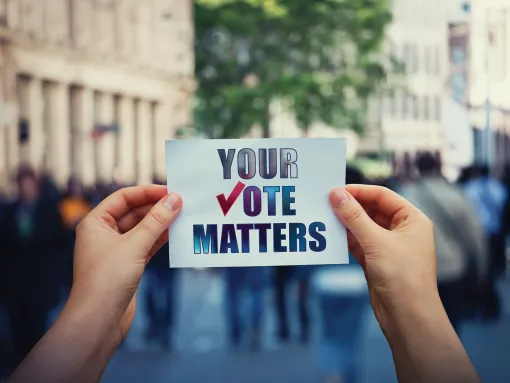
Table Talk: Family Conversations about Current EventsIn its simplest terms, voting is an act of expressing your opinion. Whether you participate in a poll, take an online survey or vote in the Presidential election, you are expressing an opinion or point of view with your vote. Merriam Webster defines voting as “to express one's views in response to a poll” or “to express an opinion.” In political elections, people vote for a variety of offices and laws. This includes…

Table Talk: Family Conversations about Current Events What are Protests? A protest is an event or action where people gather with others to publicly express their opinions about something that is happening in society. There are a variety of potential goals for a protest: influence public opinion, draw attention to and share information about a perceived injustice, gain a wide audience for the cause, push public policy or legislation forward,…
All Americans have a stake in effective response to violent bigotry. Hate crimes merit a priority response because of their special impact on the victim and the victim's community. Failure to address this unique type of crime could cause an isolated incident to explode into widespread community tension. The damage done by hate crimes cannot be measured solely in terms of physical injury or dollars and cents. These crimes may effectively intimidate other members of the victim's community,…

While bullying is still a problem in schools, the intersection of bias and bullying can be particularly harmful. Identity-based bullying is when a person is targeted based on an essential part of their identity (e.g., race, immigration status, sexual orientation, religion, or gender identity). It is common in schools and not only impacts the targeted person but everyone else around them that shares their identity. Identity-based bullying can leave all students feeling unsafe and fearful that…

Table Talk: Family Conversations about Current Events For Educators | For Parents, Families, and Caregivers Topic SummaryEvery day—from the schoolyard to the workplace—we hear biased, hurtful and offensive language, including slurs, epithets (defined below) and so-called “jokes.” We also see slurs written on walls, buildings, streets and in our social media feeds. Many people, especially those who have children in their lives, wonder what to do when they see and…
Use this collection of resources for educators and families to help teach about and celebrate Jewish American heritage in schools, communities and at home.
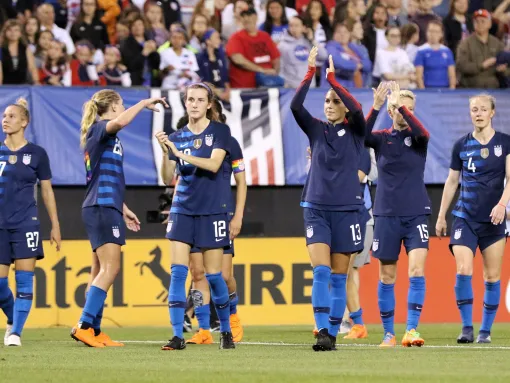
Table Talk: Family Conversations about Current Events Topic SummaryOn March 8, 2019 (International Women’s Day), the U.S. women’s soccer team filed a gender discrimination suit against the U.S. Soccer Federation, which governs soccer in the U.S. The soccer team’s complaint alleges pay inequities and inferior support and working conditions. In their statement released by the team, the twenty-eight players described “institutionalized gender discrimination” that…
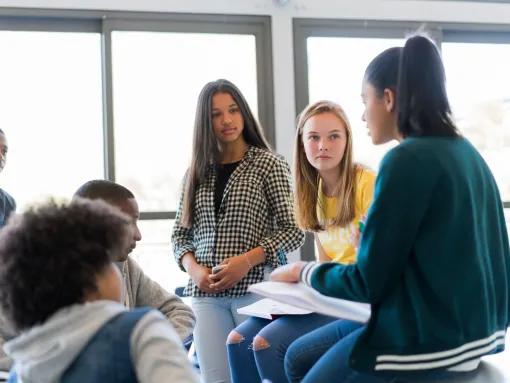
For Educators In fostering inclusive, equitable and safe schools, we encourage educators to develop group guidelines for respect and safety in the classroom. These classroom guidelines can be created in a variety of ways and the list typically includes recommendations such as: Share air timeActively listenShow empathyRespect confidentialityParticipate fullyAssume good willBe sensitive to feelingsHowever, there is often a need to go further and frame guidelines around the concept of bravery…
Increase your awareness of religious obligations and ethnic and cultural festivities that may affect students, colleagues and neighbors in your community.
The Pyramid of Hate illustrates the prevalence of bias, hate and oppression in our society. It is organized in escalating levels of attitudes and behavior that grow in complexity from bottom to top. Like a pyramid, the upper levels are supported by the lower levels; unlike a pyramid, the levels are not built consecutively or to demonstrate a ranking of each level. Bias at each level reflects a system of oppression that negatively impacts individuals, institutions and society…

November is Native American Heritage Month, which was first declared by President George H.W. Bush in 1990. The month provides an opportunity to commemorate the rich and diverse cultures, traditions and histories and acknowledge the important contributions of Native American/Indigenous people. It is also an important time to educate the general public, as well as young people in schools, about the bias, discrimination and unique challenges faced by Native American/Indigenous people…

Table Talk: Family Conversations about Current Events For Parents, Families, and Caregivers Topic SummaryIt seems like we are seeing more and more news and social media stories about people experiencing bias as they go about their daily lives—riding the subway, shopping in a store, dining in a restaurant and hanging out with friends. Indeed, the surge of such stories makes it seem like racism, sexism, antisemitism and other forms of bias and discrimination are becoming more pervasive…
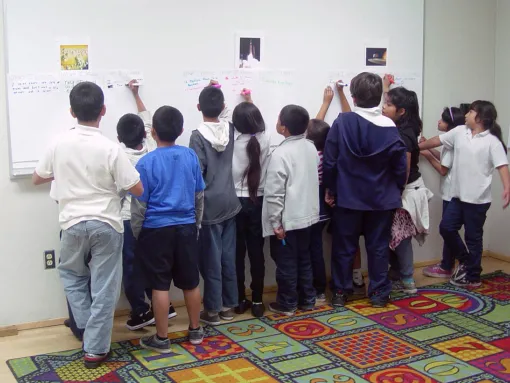
Table Talk: Family Conversations about Current Events For Parents, Families, and Caregivers Topic SummaryIn 1983, a social scientist named David Chambers published a research study on children’s drawings. The study gathered information from the late 1960s and 1970s in which teachers asked 5,000 children (in three different countries) to “draw a scientist.” One pattern appeared strongly: almost all of the scientist drawings depicted men. Through the study, Chambers was able to…
For Educators When teaching about historical atrocities, educators seek to build empathy through interactive lessons. What seems like a false solution is turning to simulation activities. These exercises frequently backfire, causing real harm to students, families and school communities. The Problem:News stories regularly surface about classroom simulations gone wrong: students assigned roles as "persecuted" or "privileged" to understand the Holocaust, or asked to experience what it "felt like…