Increase your awareness of religious obligations and ethnic and cultural festivities that may affect students, colleagues and neighbors in your community.
The Pyramid of Hate illustrates the prevalence of bias, hate and oppression in our society. It is organized in escalating levels of attitudes and behavior that grow in complexity from bottom to top. Like a pyramid, the upper levels are supported by the lower levels; unlike a pyramid, the levels are not built consecutively or to demonstrate a ranking of each level. Bias at each level reflects a system of oppression that negatively impacts individuals, institutions and society…
November is Native American Heritage Month, which was first declared by President George H.W. Bush in 1990. The month provides an opportunity to commemorate the rich and diverse cultures, traditions and histories and acknowledge the important contributions of Native American/Indigenous people. It is also an important time to educate the general public, as well as young people in schools, about the bias, discrimination and unique challenges faced by Native American/Indigenous people…
What is Everyday Bias? (In English and en español)
Tools and Strategies
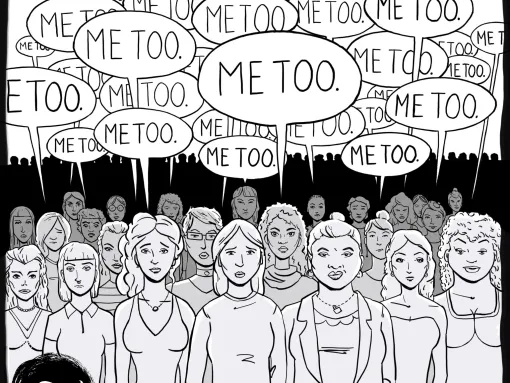
Table Talk: Family Conversations about Current Events For Parents, Families, and Caregivers Topic SummaryIt seems like we are seeing more and more news and social media stories about people experiencing bias as they go about their daily lives—riding the subway, shopping in a store, dining in a restaurant and hanging out with friends. Indeed, the surge of such stories makes it seem like racism, sexism, antisemitism and other forms of bias and discrimination are becoming more pervasive…
Table Talk: Family Conversations about Current Events For Parents, Families, and Caregivers Topic SummaryIn 1983, a social scientist named David Chambers published a research study on children’s drawings. The study gathered information from the late 1960s and 1970s in which teachers asked 5,000 children (in three different countries) to “draw a scientist.” One pattern appeared strongly: almost all of the scientist drawings depicted men. Through the study, Chambers was able to…
For Educators When teaching about historical atrocities, educators seek to build empathy through interactive lessons. What seems like a false solution is turning to simulation activities. These exercises frequently backfire, causing real harm to students, families and school communities. The Problem:News stories regularly surface about classroom simulations gone wrong: students assigned roles as "persecuted" or "privileged" to understand the Holocaust, or asked to experience what it "felt like…
For parents, families and young people Topic SummaryIn recent years, there has been a lot of attention paid to the diversity of children’s books, shining a light on the lack of diversity and amplifying the need for more children’s and young adult literature that reflects our multicultural society. In 2014, an organization named We Need Diverse Books formed, following a regularly trending hashtag with the same name (#WeNeedDiverseBooks) that helped bring attention to the issue. We…
Frequently Asked Questions About Free Speech on Campus
Tools and Strategies
What is the source of our free speech rights? Free speech rights emanate from the First Amendment to the U.S. Constitution[1] and from state constitutions. The U.S. Constitution limits the government’s ability to regulate speech based on content and it applies to all public colleges and universities. It serves as a floor, not a ceiling. State constitutions may grant more robust free speech rights than the U.S. Constitution, but never fewer. Is there a distinction between private and…
For Educators | For Parents, Families, and Caregivers Rosh Hashanah and Yom Kippur, the High Holidays, are celebrated by Jewish people all over the world. The High Holidays fall on different days each year. For the specific dates each year, check our Calendar of Observances. These and other Jewish holidays fall on different days in our calendar because they follow the Jewish calendar, which has a different number of days than our calendar. The Jewish calendar is a Soli-lunar calendar. …
What Bullying Is and Is Not (In English and en Español)
Tools and Strategies
Table Talk: Family Conversations About Current EventsBullying is a phrase we hear regularly and often: in the media, on TV shows and movies, in schools and in conversations among both adults and children. Parents, students and schools are rightfully worried about bullying. It is a problem and cause for concern but may not be as widespread as many think because the term “bullying” is often used as an umbrella to describe all kinds of mean behavior—from a rude comment to a…
Rosalind's Classroom Conversations, March 2017 For Educators By Rosalind Wiseman
“I dare you…”
Who doesn’t remember that from adolescence? At Cultures of Dignity, we’ve been thinking a lot about what it means to take a risk because taking one can be a great learning experience. And then a mom asked us these really good questions: I dare you to hold your breath, which can lead to the choking game. I dare you to chug this, take this pill, drink…
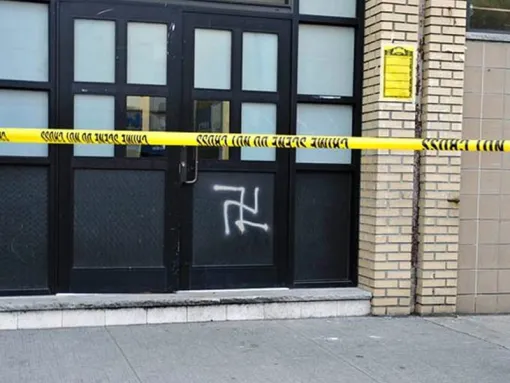
Table Talk: Family Conversations About Current Events For Parents, Families, and Caregivers | 13 and upTopic Summary We see symbols every day in all aspects of our lives. Symbols are used to convey ideas, qualities, emotions, material objects/products, opinions and beliefs. Unfortunately, symbols are also used to convey hate and bias. Lately, we have seen a lot of hate symbol graffiti in public spaces and specifically the swastika, which in most circumstances is understood as an expression…
Distribution of Religious Materials and Proselytizing by Outside Groups and Individuals
Tools and Strategies
For Educators Individuals, including parents, and groups who have no formal relationship to a school (Third Parties) may distribute religious materials, including Bibles, to students outside of school premises. They may also discuss religious matters with students.
Third-party materials or publications of a religious viewpoint may be distributed on- campus to the same extent distribution of third-party secular materials is permitted. However, courts have applied different rules to…
For Educators Release time in the public schools refers to programs in which students are released from school early to attend religious classes off school premises. Participating students must have permission from their parents. Nonparticipating students remain in school. Such programs may be constitutional if the religious classes take place off school grounds, if no public school funds are expended, and if school officials or teachers do not promote program attendance through coercion or…
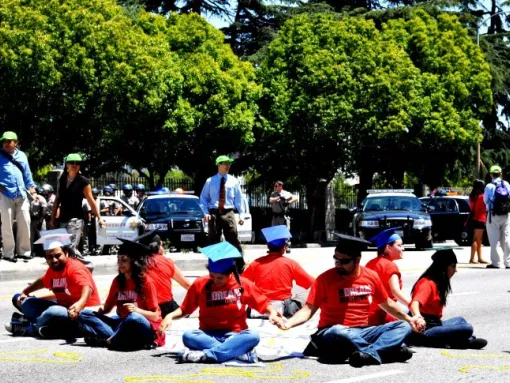
For Educators Our country has a long history of youth-led movements that brought about significant social change. Young people have advocated for child labor laws, voting rights, civil rights, school desegregation, immigration reform and LGBTQ+ rights. Through their actions, the world has changed. Because young people often have the desire, energy and idealism to do something about the injustice they see in the world, they are powerful agents for change. Our work in education helps…
Can We Talk? Tips for Respectful Conversations in Schools, Workplaces and Communities
Tools and Strategies
Being able to have respectful and constructive conversations is the bedrock of any relationship—whether those connections take place at home, school, work or in communities. However, when controversy or conflict arises, the discussions can quickly become polarized, heated and personal, making it very difficult to have a conversation where different points of view are aired and discussed. These conversations can be about something controversial like politics, current events, moral…
Let's Talk Politics: Bias, Dialogue and Critical Thinking
Tools and Strategies
Teachers may want to engage young people in conversations about presidential and other elections and provide opportunities for students to learn more, ask questions and understand what they see and hear. Below are tips and strategies for engaging in these potentially contentious conversations in the classroom and doing so with a critical thinking and anti-bias lens. These strategies can also be used with other controversial issues that arise in your classroom. It is critical that students…
11 Ways Schools Can Help Students Feel Safe in Challenging Times (In English and en Español)
Tools and Strategies
In recent years, we have seen alarming images and biased language in schools and universities: name-calling, hate-filled taunts, vandalism, racial slurs and epithets, offensive graffiti on desks and bathroom walls. In addition, many young people—especially those whose identities have been targeted publicly with words and actions—are fearful and worried. Teachers have had to work overtime to console those students and provide resources to get help. Schools must be places where…
For Educators | For Parents, Families, and Caregivers | For Students Here are some simple things you can do to be an ally to targets of name-calling and bullying. And remember—always think about your safety first when deciding the best way to respond. 1. Support targets, whether you know them or not.Show compassion and encouragement to those who are the targets of bullying behavior by asking if they’re okay, going with them to get help and letting them know you are there for them…