

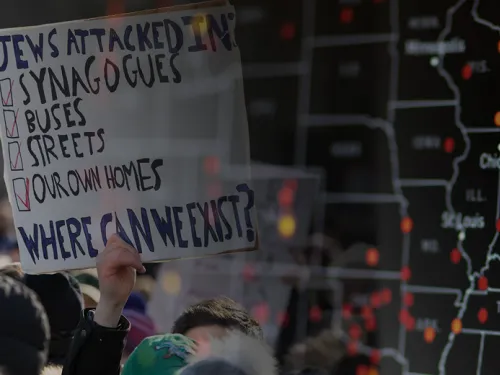




On December 11, 2019, President Trump signed an Executive Order on anti-Semitism. The order is designed to give the federal government more tools to protect Jews from anti-Semitism by addressing a gap in the interpretation of Title VI of the Civil Rights Act of 1964, a key federal statute prohibiting discrimination in programs receiving federal financial assistance. The order addresses that gap by explicitly adopting the International Holocaust Remembrance Alliance (IHRA) working definition of…
24 Results
Back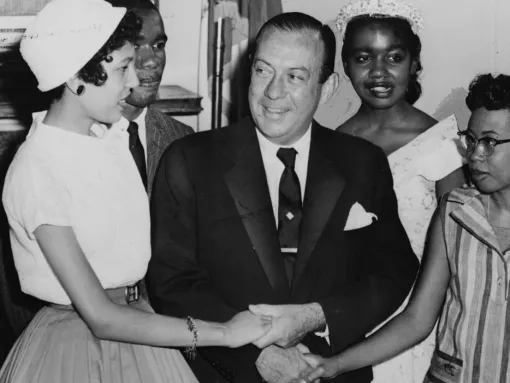
Minnijean Brown, Elizabeth Eckford, Carlotta Walls, Mayor Wagner, Thelma Mothershed, Gloria Ray, Terrance Roberts, Ernest Green, Melba Pattilo, Jefferson Thomas.
On September 23, 1957 in Little Rock, Arkansas, these nine African-American students quietly slipped into Central High School through the side door with the assistance of the city’s police, while an angry white mob numbering 1,000 swarmed the front of the school to await their arrival. Upon learning of their entry, the…
The Civil Rights Act of 1964 was signed into law by President Lyndon Johnson on July 2, 1964. The Act prohibited discrimination in public places, provided for the integration of schools and other public facilities and made employment discrimination illegal based on race, color, religion, sex or national origin. The document was the most sweeping civil rights legislation since Reconstruction. As we commemorate the anniversary of the Civil Rights Act, we have an opportunity to teach and learn…
Introduction
The right to freedom of religion is so central to American democracy that it was enshrined in the First Amendment to the U.S. Constitution.
The Founding Fathers wrote the First Amendment in response to two centuries of state-sponsored religious conflict and oppression in America, and with a keen understanding of the religious persecution in European nations resulting from official state religions and religious wars.
Recognizing the unique and intimate nature…