




A new ADL and Boundless Israel study found that reminding young Americans that most people reject antisemitism helps them recognize and report it.
94 Results
Back
A year after ADL's "Editing for Hate," bias still shapes Wikipedia, and even banned editors' work remains unreviewed.

A classroom RCT experiment shows that teaching antisemitism as a recurring conspiracy reduces teens' endorsement of antisemitic tropes.

This report details the real human impact of some of the sites Cloudflare sustains and evaluates the systemic policy and enforcement gaps that allow them to remain operational.

ADL study finds popular open-source LLMs can easily be manipulated by malicious actors to produce antisemitic, extremist, and dangerous content amid weak safety guardrails.

A groundbreaking study supported by ADL found that fact-based dialogues with a trained AI chatbot durably reduced antisemitic conspiracy beliefs and increased favorability toward Jews.
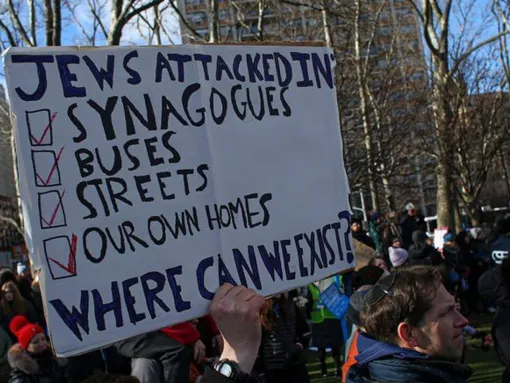
This joint ADL-Jewish Federations research shows the normalization of antisemitism and its effects on American Jews’ mental health and feelings of safety.

Research by the ADL Center for Tech & Society (CTS) found that the term ‘false flag’ ranked as the second most popular term on Reddit in a sample of conversations about the antisemitic Boulder attack and the fifth most popular following the D.C. Capitol Jewish Museum attack.

A new ADL survey found that a substantial number of Americans justify or excuse violence against Jews while most still reject antisemitism and want action taken against it.

On social media and gaming platforms, hate and harassment thrive in closed online spaces, which lack the visibility and accountability of more open or public ones.

Artificial intelligence is rapidly reshaping how people consume and trust information—including what books they read. Amazon, the world’s largest bookseller, uses Large Language Models (LLMs) to generate short, snappy summaries of customer reviews. While this may be useful when applied to bedsheets or kitchen appliances, applying AI to book reviews—without human oversight—is proving to be deeply problematic. We found that AI-generated reviews are promoting books that…

Co-produced with Builders For Tomorrow Executive SummaryADL research shows that four leading LLMs, particularly Llama, display bias against Jews and Israel. LLM bias in other areas has already been highlighted; this report provides the most comprehensive evaluation to date of anti-Jewish and anti-Israel bias in major LLMs—GPT (OpenAI), Claude (Anthropic), Gemini (Google), and Llama (Meta). In 2025 and beyond, the importance of large language model (LLM)…

Co-produced with Builders For Tomorrow Executive Summary ADL has identified extensive issues with antisemitic and anti-Israel bias on Wikipedia in multiple languages. These issues include 1) a coordinated campaign to manipulate Wikipedia content related to Israel, the Israeli-Palestinian conflict, and similar issues, in which a group of editors systematically evade Wikipedia’s rules to shift balanced narratives toward skewed ones, spotlighting criticism of Israel and downplaying…

Most Jewish students face antisemitism; over 25% of Jewish students said they had observed anti-Jewish activity from faculty. Rates of self-censorship of Jewish identity and views of Israel remain high.

by Dr. Kat Schrier, Professor and Director of Games & Emerging Media at Marist University 29 min read Executive Summary This report shows there was hate and harassment in about half of the online multiplayer game sessions that ADL asked a group of participants to play using a range of religious, ethnic, and national identities. Previous research by ADL and others has repeatedly suggested that online games are spaces where hate and harassment are rampant; we set out to…
Majority of Jewish parents surveyed report antisemitism in K-12 schools; and despite high public support for Holocaust and antisemitism education, less than 1/3 get it.
An ADL study shows that Jewish and Israeli Americans are subject to discrimination in the US labor market because of their identity, not their qualifications.
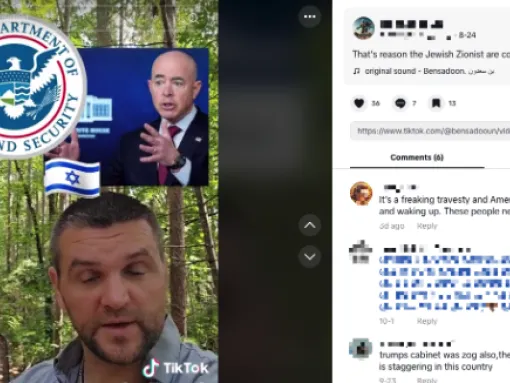
Executive summaryFalse and misleading election narratives are surging on social media platforms in the lead up to the US presidential election. Since 2022, at least three major platforms have weakened their rules against disseminating election misinformation. Of these, X/Twitter also appears to have rolled back enforcement against hateful election misinformation. Ahead of this election, a flood of narratives has surged rehashing antisemitic tropes and pushing anti-immigrant…
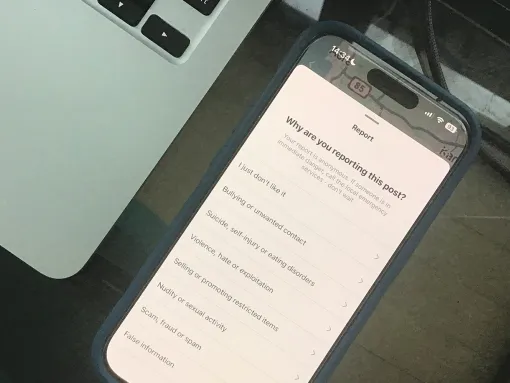
Executive Summary Platforms are still failing to take action on antisemitic hate reported through regular channels available to users. Researchers at the ADL Center for Technology and Society (CTS) tested how well five major platforms enforced their policies against hateful content in two areas: antisemitic conspiracy theories and the term “Zionist” used as a slur. Most platforms only took action when ADL escalated the reports through direct channels, and even…
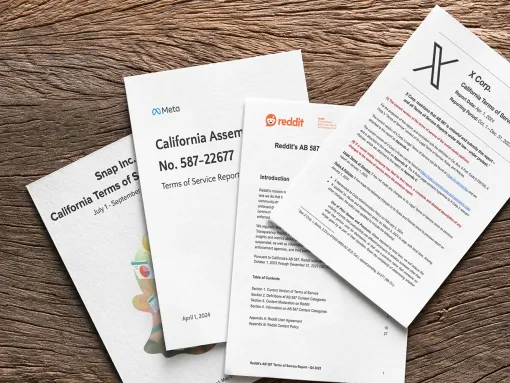
12 min read Executive Summary Most tech companies have rules against hate and harassment. But until a new law in California was enacted in 2022, they had not been accountable to the American public for enforcing them. The law that could change all this, California AB 587, requires social media companies over a certain size to publish their terms of service, including key definitions of terms, and report regularly on how they are adhering to their policies…